


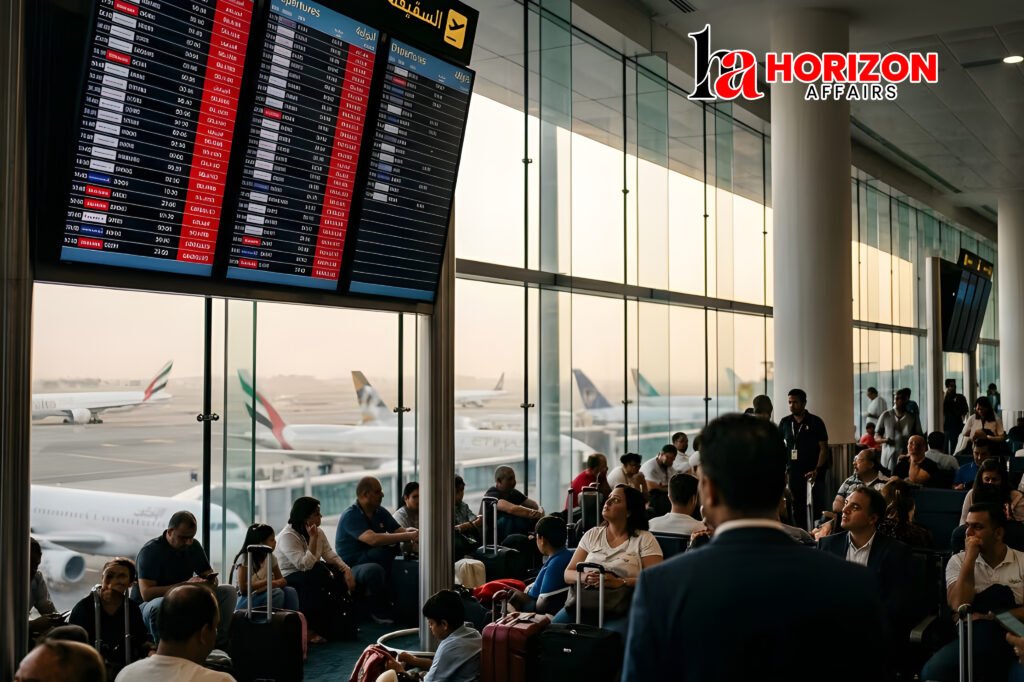
Global Air Travel Chaos and Economic Impact from Middle East War
As the Middle East war between Iran, Israel, and their respective allies continues to escalate, the conflict’s impact on global travel and the economy has become profound and immediate.
International airlines have been forced to cancel thousands of flights due to airspace closures and heightened security risks in the Gulf region. Major travel hubs, including Dubai and neighboring airports, have paused operations, leaving hundreds of thousands of passengers stranded or rerouted.
This unprecedented travel disruption is being compared to the global travel chaos seen during the COVID‑19 pandemic. With uncertainties about safe air corridors over conflict zones, carriers have adopted cautious approaches, significantly disrupting international itineraries.
The economic fallout goes beyond aviation. The Strait of Hormuz — a critical artery for global energy shipments — remains effectively closed, threatening to choke off about one‑fifth of the world’s crude oil transit. This has already triggered oil price surges, pressuring markets and potentially feeding into inflationary pressures worldwide.
Economic analysts warn that prolonged disruption to trade and energy flows could slow economic growth in major import markets, especially in Europe and Asia, which rely heavily on stable access to Middle Eastern oil and gas supplies.
Global shipping and trade are also feeling the shock. With key container ports temporarily suspended and shipping companies diverting vessels to avoid risk zones, supply chains for everything from fuel to manufactured goods are experiencing bottlenecks.
While governments and businesses scramble to mitigate disruptions, the broader war‑induced economic shock amplifies the urgency of diplomatic efforts to stabilize the region and reopen vital trade routes.